We sat down with one of the most dedicated Cinema 4D artists working today. William The Third has posted a daily render every single day for the past six years, building a large following through consistency, speed, and a style that keeps pushing into stranger territory.
He is also a serial entrepreneur. Alongside his art, he serves as a CTO, runs multiple ventures, and once built an AI-powered company in nine hours just to see if he could.
In this interview, we dive into what drives him, his view on AI, his path from five-dollar Fiverr gigs to high-end clients, and why he believes the artists who push boundaries are the ones who get remembered.
The name
Where does “the Third” come from?
I'm William Willoughby III. My grandfather was the first, my dad was the second. And every time I got in trouble as a kid, my mom would always say, “William III, get over here.” It just stuck in my head.
And then 3D, the third, that's a good combination. Something different. If you're too much like everybody else, you get washed out. The ones who push the boundaries are the ones who are remembered.
Who he is and what he does
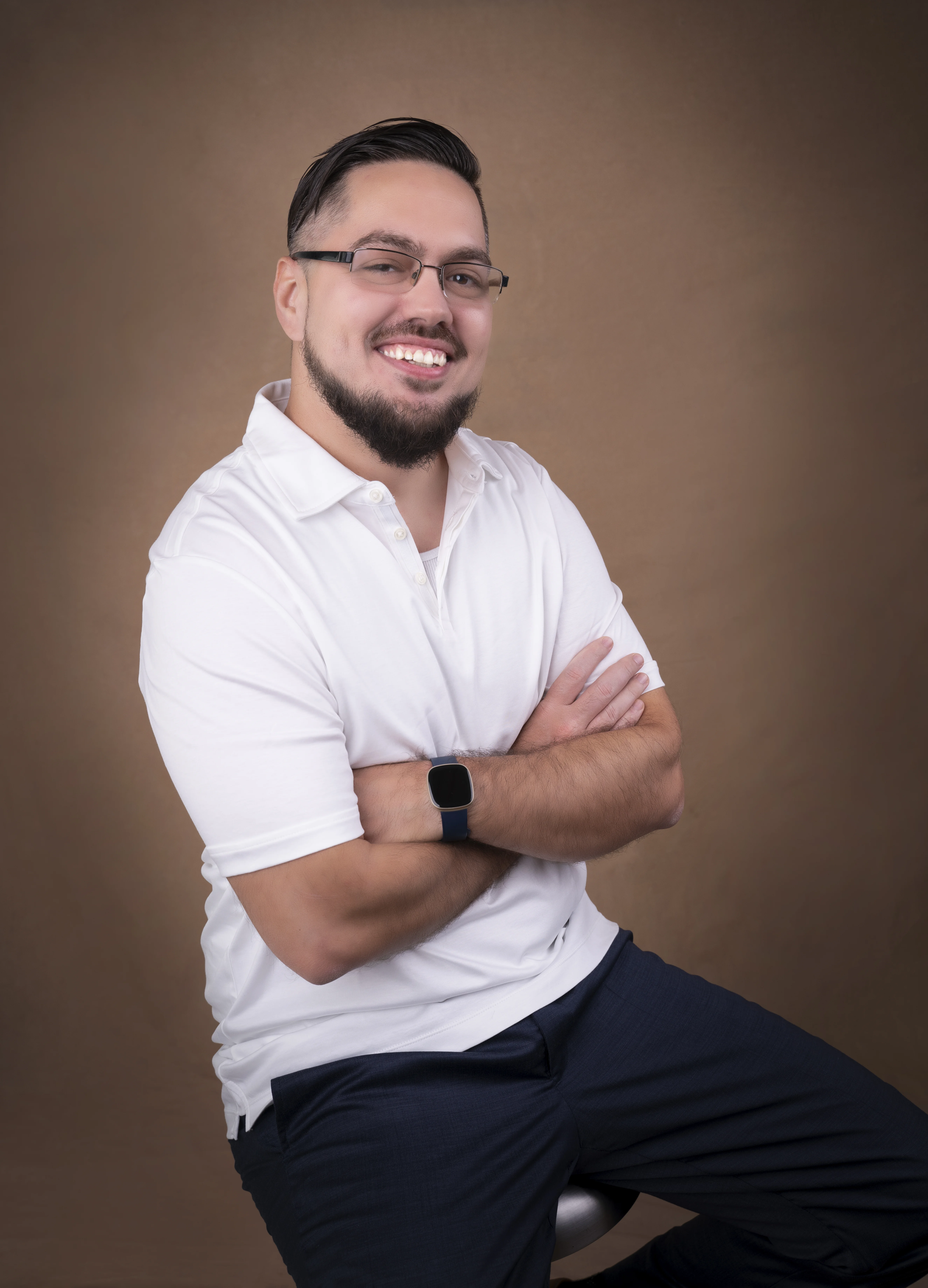
Tell me something about yourself. Who are you, and what do you do?
I'm a 3D artist, mostly working in Cinema 4D and Redshift, and I've been doing daily renders for six years now. On the side I'm CTO of Salem Speakers and I run a couple of other businesses. I love staying busy and I'm always building something.
From pencil to pixels
You moved through pencil, ink, painting, spray paint, and graffiti. How did that path eventually land in Cinema 4D?
Pencil first, then I moved to color pencil, then ink, because I didn't want the ability to erase. I wanted to be like, as soon as I put my line down, it is what it is. Let it flow. If you make mistakes, who cares? Just keep going.
Then painting, watercolor, acrylics, spray paint, and graffiti. I'm constantly trying to see which mediums I excel at and which ones I don't.
I studied color theory for over 15 years and went to the Art Institute of Fort Lauderdale. I always wanted to do things no one else was doing. Salvador Dalí had a huge effect on me. He was drawing elephants with skinny arms and legs, melting clocks, things no other artist was doing. That's what pulled me deeper into surrealism.
What pulled me into 3D was perspective. Once you draw something, you're stuck with that composition. With 3D I can change the camera, change the lighting, and the entire mood and understanding of the piece changes. That ties back into my whole thing about trying to understand every perspective.
Behind the businesses
You also run multiple businesses on top of the art. How did that come together?
Me and my brother were sitting one day in my room. I was just lurking online, searching “how to make money as an artist,” and I came across this website called Fiverr. For five bucks, this person will draw you something. So I said, I'll design your album cover for five bucks. And someone paid me.
So I upped my prices to 15, then to 25. People were paying me for something that took me 10 minutes inside Photoshop, a couple of photo manipulation techniques, and they were paying me 30 bucks, 50 bucks a pop.
That's where Jacob Salem found me. He hired me on Fiverr to do some posters back in the day, before AI was ever a thing. Then he was like, “Man, you're very skilled. Let's just bring you on board. Me and you together can grow a business.”
So we built EZMetrics, which then turned into SellCourses.com, then turned into Salem Speakers. I'm CTO of Salem Speakers now. We're at 20+ employees and constantly growing.
I built BrandGenie.com in nine hours just to see if I could. It's a full house AI agent bot system that generates a complete brand, SOPs, and customer avatars for a company. They fill out a couple of pieces of information and they can build an entire brand guideline or brand book.
I try to balance my business side with my art side. I get to design websites and front-end experiences while using the art skills I have. I'm very multi-disciplined.
The daily render ritual
How did you start the daily renders, and where do all the ideas keep coming from?
My original goal was, hey, let's just do one year. Then I was like, alright, let's try three. If you did three, go ahead and do five. If you did five, why not do ten? I'm at six now.
The ideas come from constantly searching. I try to bend reality because I feel like we're constructed by our current perceived reality, and that's not really telling the whole truth. It's only telling a portion. So I try to break the balance of reality.
The other thing is, as CTO working from home, I lead a strong tech team and oversee the build, which gives me the freedom to carve out time for daily renders. I'm just sitting at my computer for an hour every day. That's it. People think a supercomputer had to do all of it. Nope. Just me at my desk.
Creativity over rules
On a line between artistic and technical, where do you sit?
I'm creative first and foremost. Everything starts with creativity. If it's not outside the box or different in some way, I'm not interested.
Even when I'm trying to do realism, I still have this habit of throwing something in that normally wouldn't be there. I'll use the technical principles when I have to. Composition and color theory go across it all, but I still break them even when I'm not supposed to. Like, you're only supposed to use an HDRI and an area light. Nah. I want to push the limits.
Skulls, brains, and the universe
There's clearly a deeper thread running through your work. What's the philosophy behind it, and how does it show up in your renders?
The human race is nothing but the universe in physical form, experiencing all perspectives of storytelling. The universe is trying to understand itself, and we're all just trying to understand ourselves.
It doesn't matter what we look like, what we sound like, what our backgrounds are. When it comes down to the nitty gritty, we're all just trying to figure out who we are and what we're supposed to do.
That's why I do a lot of skulls and brains. People have a race problem with colors of skin, and it's like, you break us down, we're nothing but a nervous system. The skin doesn't matter. We're all the same human race.
In the renders, that shows up as bending reality. I'm constantly altering things, throwing in elements that wouldn't normally be there. We're constructed by our current perceived reality, and I want to push past that.
Building lasting relationships
What keeps your long-term client relationships alive?
A lot of high-end clients, your Pepsis, your Coca-Colas, need someone who can think outside the box. They don't want a single-discipline artist who's only great at one specific style. They need variety.
So I bring realism, surrealism, lighting, procedural shader systems, and animation. I can build out shader systems with exposed parameters and hand it over to their internal team so they can just move sliders around and get a completely new scene. They love that.
And honestly, I never had to do any client outreach. All my 3D art clients found me through Instagram, through the daily renders. They reach out because they need someone who can pull tricks out of the hat.
A favorite from the past
Out of everything you've done, what's your favorite, and why that one?
The 40-foot statue I did for Dearly Beloved, this very high-end cocktail restaurant. They found me on Instagram off the daily renders and reached out.
But honestly, I still have this pencil piece in my attic from when I was a student. The security guard and the teacher were having a bidding war trying to buy it from me, got up to like 500 bucks, and I told them no, I'm not going to sell it.
I keep it sealed up. It was my first real piece, the one that showed me I can do what I vision inside my mind. So that one's near and dear to me.
AI as a tool, not a threat
Where does AI help your work, and where do you keep it out? Do you worry about AI taking over the market?
I love AI. I use it as a tool. I'll use it to generate textures, help come up with concept art, and then I go and build the actual piece inside of C4D. I don't just press generate and post some weird looking scene.
I cannot stand it when people say, “I'm going to lose my job to AI.” No CEO is going to sit there and go on ChatGPT or Runway and start creating their own ads. They're going to expect an artist to output more concepts at a quicker rate, in more directions.
People complained about Photoshop. “Oh, photo manipulation is stealing the work.” Now it's taught in universities. Photographers complained about the iPhone camera. Now digital is taught in universities. It's inevitable.
The part where I do feel bad about AI is elderly people getting tricked. 99% of people absorbing these visuals have zero clue. Most can't see the pixel alterations on the edges or the Gaussian blur where it shouldn't be. That's the sad side of it.
Inside Cinema 4D
You went deep on C4D. What do you love about working in it, and what frustrates you?
I'm strongly C4D and Redshift. I tried Houdini, couldn't quite wrap my brain around it. I'm diving into Unreal Engine right now, building out a scene every weekend, but only because C4D can only do expansive scenes up to a point.
I want to do a forest with 50 million trees and a flythrough, and that takes a lot of power in C4D. So Unreal is for the long-term project stuff, a month or two on one piece. But for everything else, C4D is my go-to. I don't think I'm ever going to leave Cinema 4D.
The procedural side is my superpower, especially with Redshift and Substance Designer. I can build out procedural shader systems with a bunch of exposed parameters. I can hand it to a client like Pepsi and say, give this to your internal team, they can just move these sliders around and get a completely new scene.
Same thing with physics dynamics inside C4D. They love that kind of variety instead of one static animation.
Advice to the next generation
What would you tell a 3D artist just starting out today, especially in this AI era?
If you want to make money doing this, don't be afraid to learn AI. It's inevitable, I don't care what industry you're in. Don't just look at what's on the surface today. Look at where things are going in three years and go learn that.
The other thing is be ready to work. There's a saying about entrepreneurs: they're willing to work 80 hours a week for themselves to avoid working 40 hours a week for somebody else.
I never went out to clubs or did all that stuff. I just focused on building my business. When you're not focused on building yours, somebody else is, and you'll lose opportunities that normally would have been available to you.
On Drop and Render
Lastly, what are your thoughts on Drop and Render?
I'm die hard Drop and Render. I'll never switch.
It's been around three years. You guys actually reached out to me on Instagram, and honestly I had no idea what cloud rendering was at the time. I was like, hold on, you guys are gonna steal my scene? But you walked me through the process and a whole new world opened up.
I didn't have to buy my 4090. I can just send a project off and keep working on the next scene on my own machine while you handle it. It's like having my own server farm sitting next to me.
You guys are the reason I went from still renders to doing 10-second seamless animations. Most daily render artists are still doing stills because they don't have the horsepower for animation. With cloud rendering I can do glass particles, the moon exploding with glass particles inside, full physics scenes, things I couldn't do on my own machine in a daily window. And I'm not running through GPUs every six months.
The other thing, and this matters more than people think, is the support. I've only had maybe four or five issues in three years, and almost every one was my own fault. Forgot to turn my Mograph into a static mesh, or flip a switch on my HDRI, or switch from sRGB to ACES, something stupid. I message the team and within 24 hours they're back to me, they fix it, I'm rolling.
You don't get that human touch with a lot of companies. That was huge value to me.
Connect with William the Third
If you enjoyed this highlight and want to explore more of his work, you can follow William and stay up to date through his official channels:
Instagram:
https://www.instagram.com/art_by_williamthethird
Daily renders, behind-the-scenes glimpses, and a constant stream of new experiments in surrealism, procedural shaders, and bent reality.
Website:
https://www.williamthethird.com
Explore his full body of work, client projects, and the philosophy behind his 3D art.