Adam Spizak has spent decades moving between technology and art. His journey began on the Amiga, continued through early versions of LightWave and Cinema 4D, and eventually grew into a multidisciplinary career spanning 3D art, UI/UX, art direction, and commercial production.
That range is central to how Adam works today. He combines the eye of an artist with the structure of a designer, moving comfortably between personal worlds inspired by games and painting and the practical demands of client work. He is equally open about the less glamorous parts of the process: broken software, difficult estimates, social-media pressure, changing technology, and the importance of communicating well when a project becomes stressful.
In this interview, Adam talks about his path into 3D, the personal projects that mean the most to him, his perspective on AI, and why consistency matters more than chasing an algorithm. He also explains how Drop & Render became part of his production workflow, and why responsive support is the feature he values most when a deadline is on the line.
From the Amiga to Cinema 4D
How did your journey into 3D begin?
Oh, that's like ancient times. We have to go all the way back. I started on the Amiga 500 and later got an Amiga 1200. SeaQuest was one of my favourite shows, and it was one of the first science-fiction shows using a lot of CG. They were so proud of using Amigas that the end credits said it was made with Amiga 4000s. The Amiga 1200 was essentially the home version, so that connection was exciting to me.
I tried LightWave because that was one of the big 3D packages in the 1990s, but Cinema 4D was also one of the first programs I experimented with. The process was completely different then. You would render with a scanline renderer, move the image into ImageFX, and try to build something from there. Even getting a preview took patience.
I moved between different packages for a while, including 3ds Max, but Cinema 4D was simply easier for me to understand. Its UI felt much more approachable. The really big change came later with GPU rendering. I remember seeing Octane and not being able to understand how you could load an HDRI, rotate it, and get an almost real-time representation. Suddenly a preview that once took minutes took seconds. That was the moment I thought, now I really want to do 3D.
Where 3D and UX meet
You built your 3D practice alongside a career in UI and UX. How did those two sides of your work begin to overlap professionally?
The market for 3D was tricky in the early 2000s. You either had to be a really hardcore 3D artist to get hired by a big company, or you got budgets that were questionable and not enough to sustain yourself. I had a good eye for detail, so a lot of my skills translated well into UI work. It has the same need for precision and consistency.
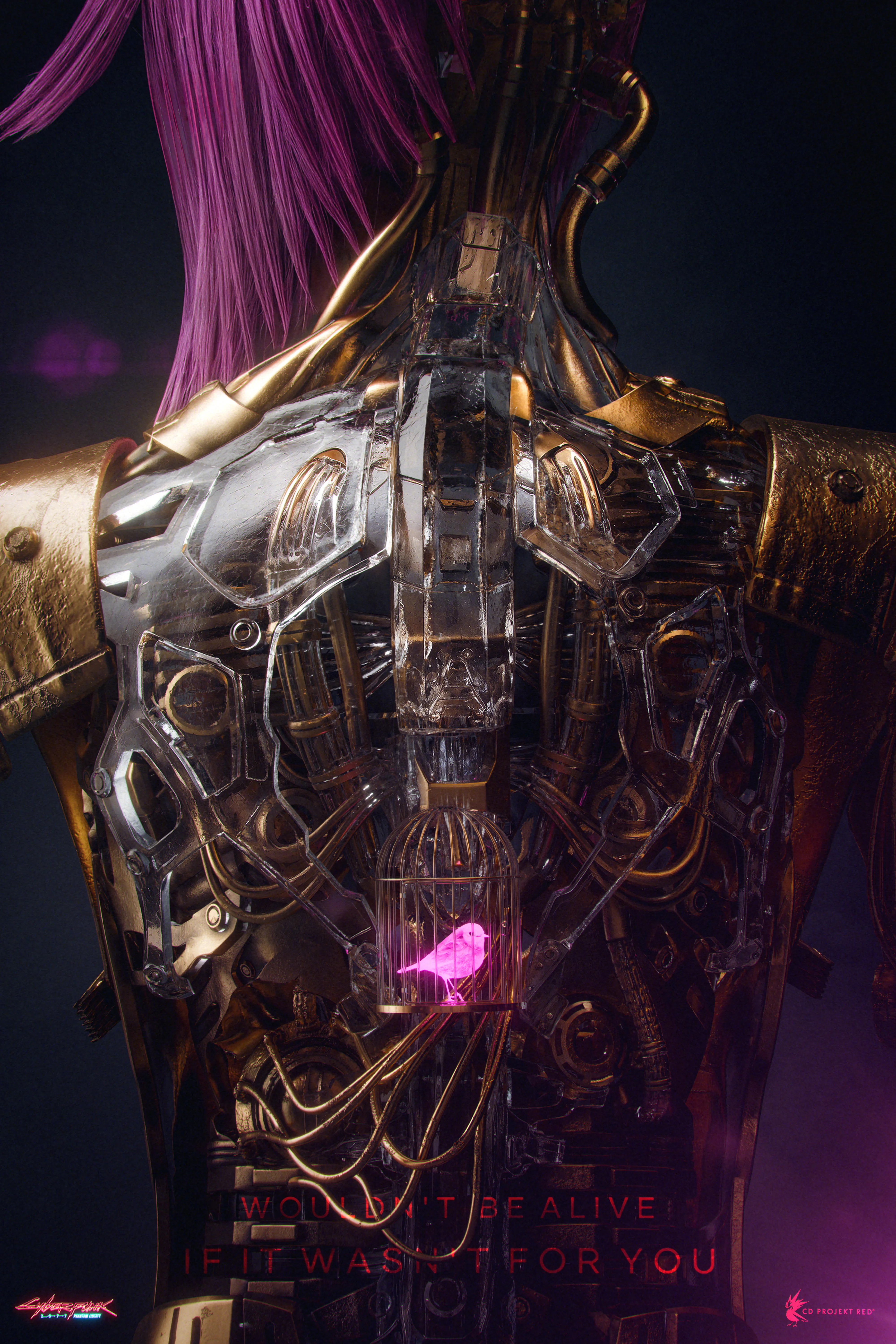
Around thirteen or fourteen years ago, an agent approached me about joining Thomson Reuters. They were expanding the design team and liked that I did both UI and 3D. I could help with the interface work, but I could also help them produce marketing assets. That is how those two parts of my work started coming together professionally.
I kept posting personal work as well. Sometimes the work you like most gets fewer likes, but that does not really matter. You would be surprised how often one client likes that exact piece for a very specific reason. I always tell younger designers to try to do both: make a project you are happy with, then highlight something in it that has a practical use for a client. It could be the cloth, the character work, the lighting, or another specific skill. A client may see that and think, I know someone who can do exactly what we need.
Translating ideas into production
What role do you play in client projects today, and how do you balance that work with your day job?
I do a bit of art direction, but I also do a bit of housekeeping. I help get things on track, consult on the work, render, and do some post-production. One skill I gained from corporate design is translating requirements into action points. A client will say, “We like this, but not like this,” and you have to translate that project-management conversation into a design conversation the artists can actually use.
The team is spread across different countries. Some people are in the UK, France, and Spain, and others are in the United States. You end up replying to the US team until two or three in the morning, then waking up early enough to give feedback to the people in Europe. On difficult projects, that becomes very stressful very quickly.
At some point I thought, I can get a day job and we can take maybe 30% of the client work, focusing on clients we actually enjoy. There is less stress, nobody is working until five in the morning, and the artists can be compensated better because my role is mostly consulting. Everyone sleeps longer and nobody is constantly stressed. It is a win-win.
My day job now is as a UX principal on a design-system team at Bentley. It is a very senior and relaxed team. People understand the different roles and trust one another to deliver. I can walk my dog, have a conversation like this, or finish earlier and come back for a call with the team in Australia at nine in the evening. That flexibility is what makes the balance work.
The projects that stay with you
Looking back across your personal work, which projects are your favourites, and why do they stand out to you?
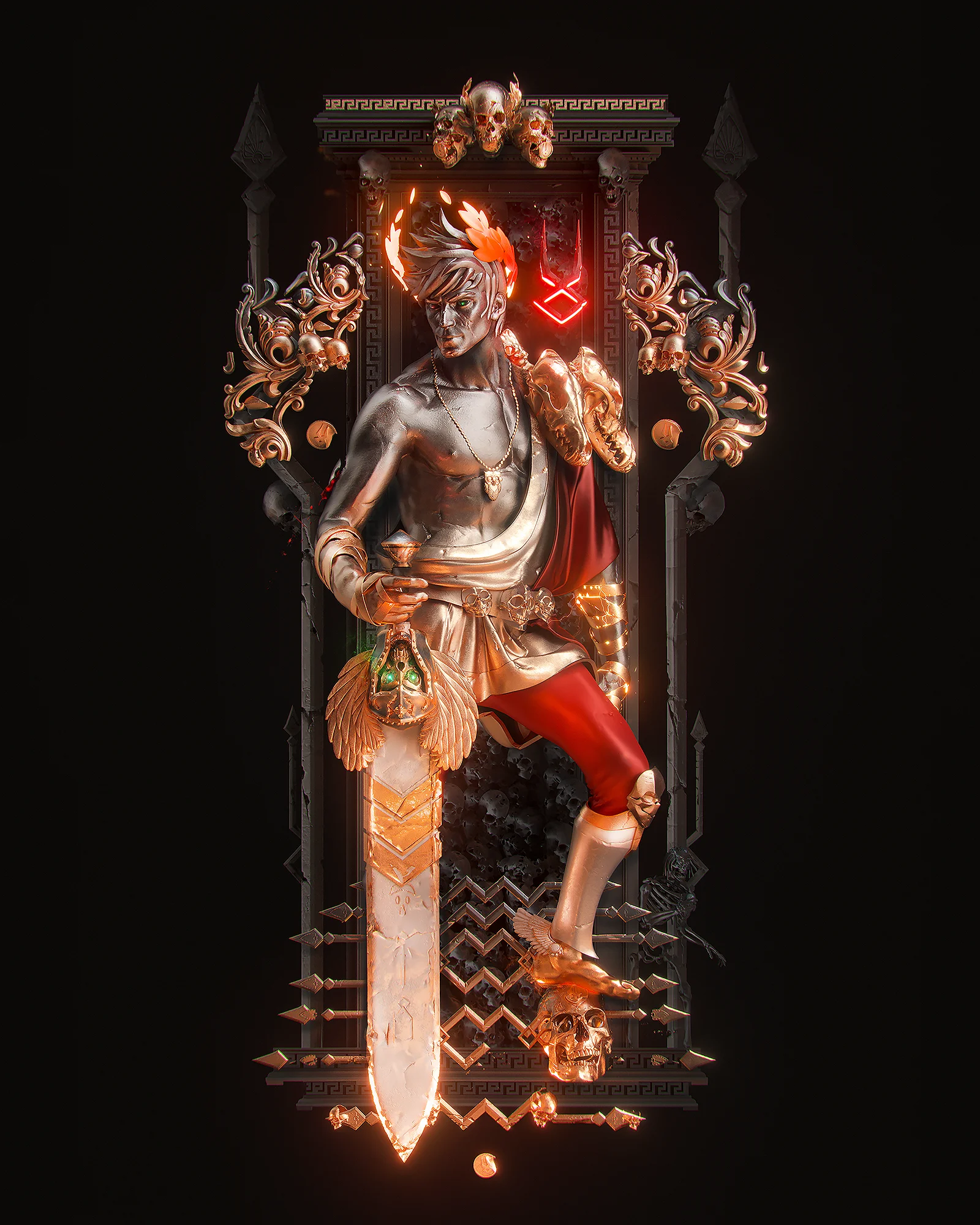
Oh my goodness, do I have a favourite? I think the Hades piece is one of them, partly because I love the game and there is an emotional connection to it. I also like the diorama feeling of that image. I worked with one of my artists to sculpt characters from the game, including Zagreus, and it was simply a lot of fun to make.
Another one is The Last Shepherd. I love Mass Effect, and that piece mixes several things I enjoy: skull art, game storytelling, and animation.
The Nameless Mountain is probably one of my favourite projects as a whole. It is a sequence of animated shorts with a samurai, and it clicked on every level for me. Aesthetically, it came out exactly as I hoped. Visually it worked, and I found a track that worked with it as well. I loved the colours and the little bird. It was also much more work than it looks because I had to animate the tree, work out the camera cuts, and cheat the position of the bird between shots to make the framing work.
My Dante's Inferno piece has another emotional connection. Wayne Barlowe worked on the concept art for the game, and his paintings were one of the reasons I became interested in that kind of game art. He commented on my piece, which was a real highlight because I love his work.
Games, paintings, and dark worlds
Where do you draw your inspiration from, and how have games, painting, and your Polish background shaped your work?
There are almost too many artists to name. I look at a lot of painters, films, and games, and I have a compulsion to screenshot games while I am playing. Sometimes I simply take my phone out and photograph the television because I want to remember a particular image.
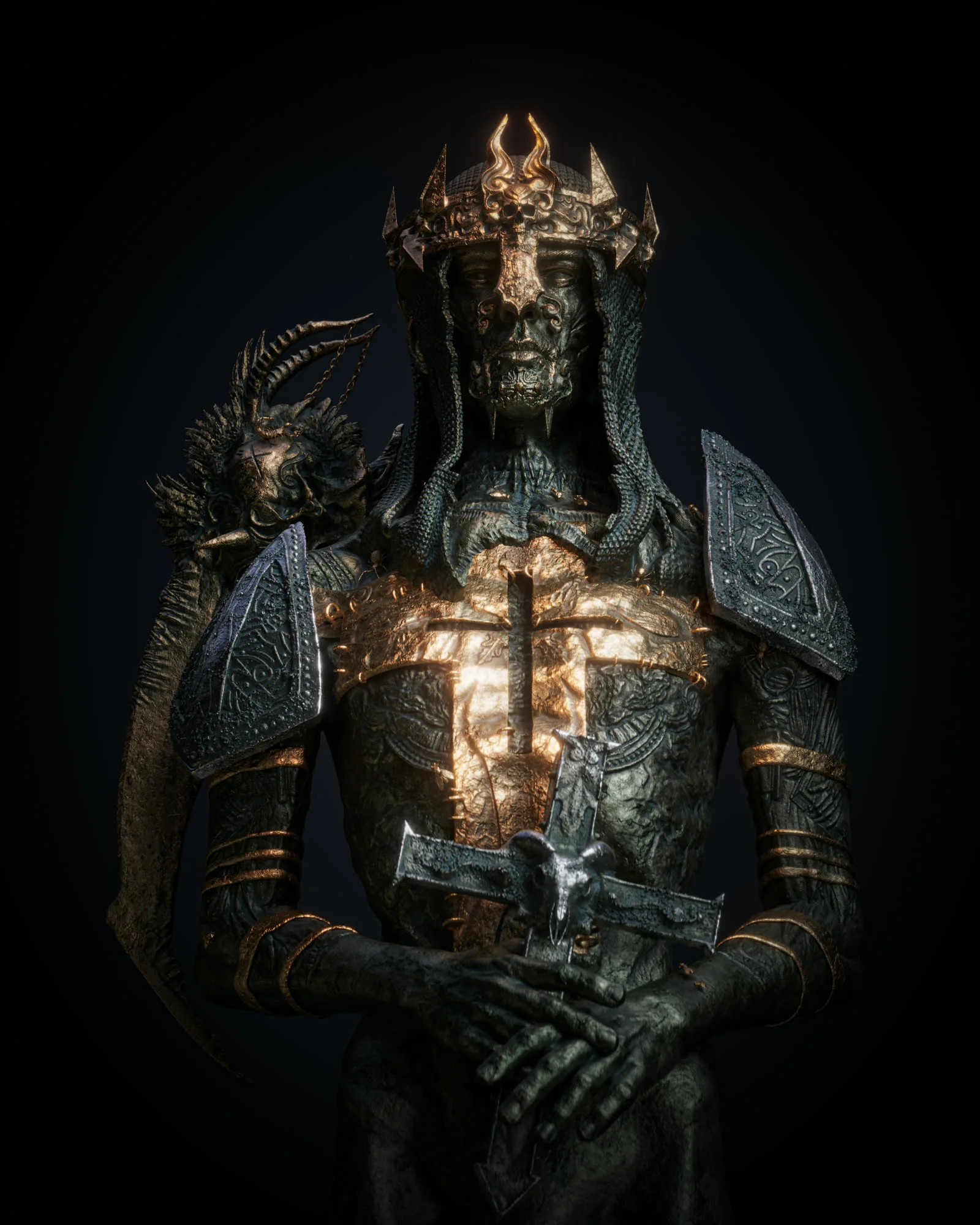
I play loads of Soulslikes and boomer shooters, especially gothic ones such as Dusk and the early Quake games. I love Elden Ring and Sekiro too. FromSoftware creates these very twisted takes on characters, and the art direction is phenomenal. The newer Doom games are another example of art direction I really admire.
I grew up in Poland and moved to the UK when I was 21. There is probably a Polish and Slavic influence in my work, but I think a lot of it is unintentional. You see cultures overlapping in games such as The Witcher 3 and Witchfire. Witchfire has this mixture of Slavic imagery, the Spanish Inquisition, the church, and some Nordic elements. At a certain point, those cultures start collapsing into one another.
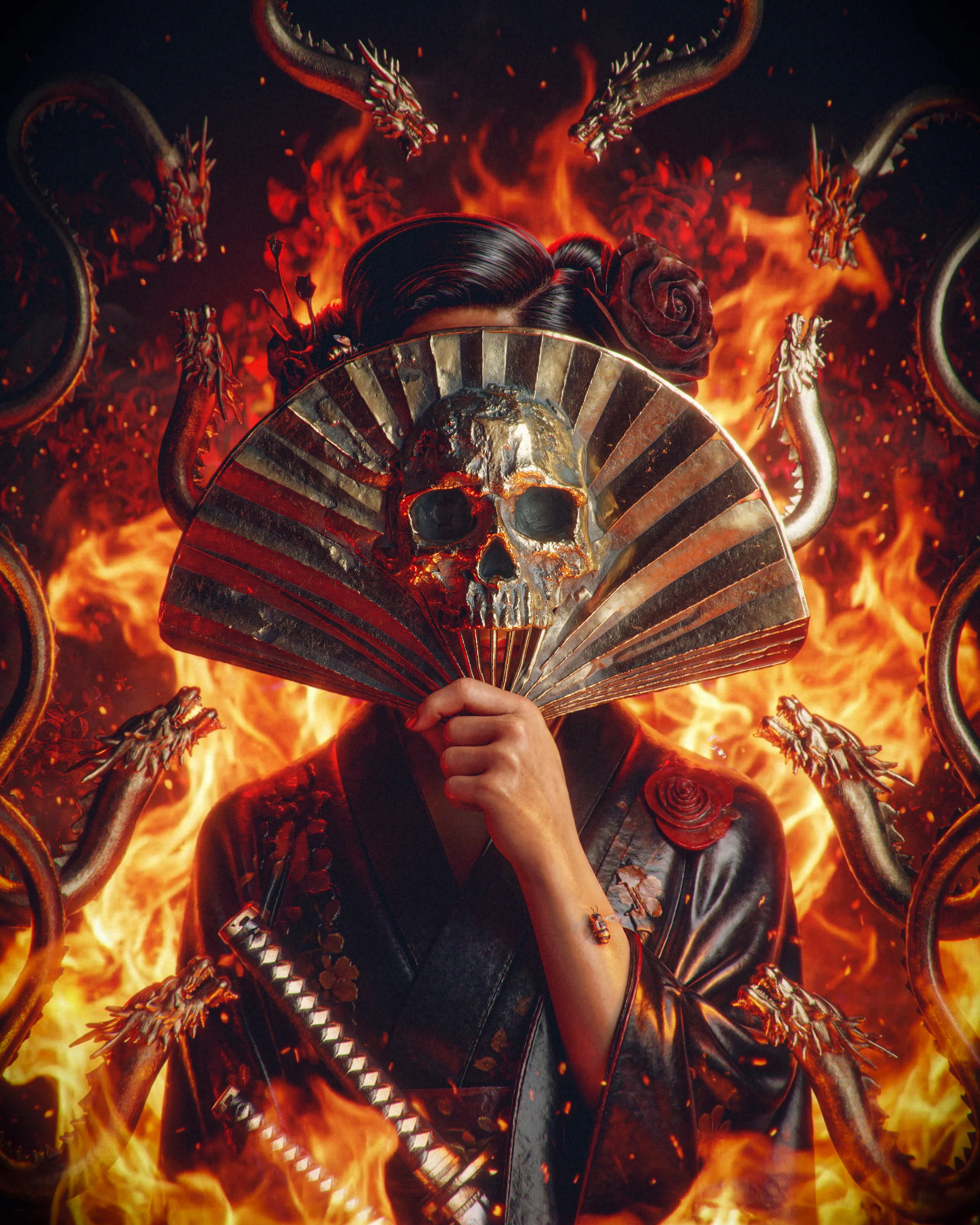
Zdzisław Beksiński is also a huge influence. His work has that decay, surreal horror, and emotional torment connected to life under communism. I was eight or nine when communism ended in Poland, so I probably carry emotional memories from early childhood and from my parents. Cronos: The New Dawn clicked with me because it combines science fiction with that Eastern European dread. It is set in an alternative Kraków where communism did not end and a disease mutated people. The atmosphere felt very familiar to me.
There is a collective culture in games and films where everything starts inspiring everything else. Teams split up, people carry ideas into new projects, and you can recognise the same visual language in a different game. After a while, it becomes difficult to point to one source because all of those influences have mixed together.
AI and the changing value of creative work
How do you think AI will change the creative industry, from newer artists to established professionals?
I use a lot of AI in my day job, including agents integrated into UI and UX tools. As an artist, I understand why people are protective. A lot of these models were trained on art that was stolen, and there is no denying the environmental impact either. Data centres affect electricity grids, water supplies, and the communities around them. That conversation has to be honest.
Where I sometimes think the discussion gets lost is in asking where AI is actually useful. In my day job, we had a very manual task involving huge libraries of variables, components, links, and deprecated items. We estimated it would take three people more than a week. An AI agent gave me the information I needed in a few hours, then I spent another day checking and cleaning it. It removed a task that was basically a lot of clicking, copying links, and making notes. There was nothing enjoyable or creative about it.
I think the VFX post-production pipeline will change forever. Rotoscoping, making depth maps, and separating things such as hair or translucent materials can take hours. Even if you are a senior Nuke or After Effects artist, those tasks are still terrible. If an AI tool can produce a useful depth map or alpha mask, that is where it starts finding a place in the workflow.
Clients are misunderstanding AI at the moment. We use AI-assisted tools in design, but we always tell stakeholders that they do not replace designers. The tools hallucinate and make mistakes. You still need someone with the right skills to operate them and make the output useful. I think there will be a reckoning on both sides as the market matures. These tools will settle into certain workflows, but right now the quality is making enormous leaps every few months, so nobody really knows where it will land.
Growing without serving the algorithm
What advice would you give artists who want to grow an audience on Instagram without burning themselves out?
That is a tough one. It is difficult for two main reasons: the amount of work competing for people's attention and how broken Instagram's approach can be. People have messaged me saying they thought I had quit because they had not seen my work for two or three years, even though they were following me and I was still posting.
Anyone who gives you a definite answer about how to grow an Instagram account is either making an educated guess or telling you what worked for them. That does not automatically mean it will work for your audience. People say, “I post every day, and that is why it works.” I tried that and it did not work for me at all.
I always say that many clients appreciate quality more than quantity. If you can make good work every day, go for it, but most people cannot. Trying to force that pace can burn you out. Then the work does not perform well enough to justify the energy, you resent your own work, and you start feeling jealous of people who somehow made it work. These systems are designed to make you keep feeding them, so do not let them play you.
Consistency is more important than frequency. If you can sustain once a week, do that. If it is once a month, that is fine too. Give yourself a head start before you begin so you have a buffer for holidays or client work. Consistency will always beat rushing for a few weeks and then stopping.
Also, if you spend two weeks building a scene, render more than one shot. Make close-ups, different angles, different lighting, different materials, and colour variations. Sometimes the close-up works better than the main image. You can get four or five very different artworks from one scene instead of spending all that time for a single post.
Do not stress too much about the numbers. Agencies may find your work by searching a specific tag, and a project with fewer likes can still bring you a client. Make work you are happy with, but also show the parts that could translate into commercial work.
Production lessons learned the expensive way
What practical workflow and business lessons have made the biggest difference in your production work?
The simplest lesson is: do not update in the middle of a project. Do not update the software, do not update the plugins, and do not update the hardware. If you have a deadline coming, just do not do anything. Wait until the project is finished. I keep many versions of Cinema 4D because sometimes I need to open an older scene with the version of Octane it was built with. An update may fix one bug, but it can also break something that was working yesterday.
I also always render in 32-bit because there is so much more you can do in post. I see artists spend serious money rendering straight to PNG or even JPEG, and it makes no sense to me. You lose so much data even though it does not cost extra to render an EXR. With the full range, you can make much bigger exposure and colour corrections and get proper masks for compositing.
Scene preparation matters for the same reason. Bake what needs to be baked, package the assets, and check the HDRIs and dynamic links. If you make a mistake on a sequence that costs a few hundred pounds to render, you cannot tell the client to pay more because you forgot to bake something. You have to eat that cost, and suddenly your profit is gone.
My technical-drawing teacher gave me an extreme rule for estimates: multiply the number by two, then add two in the same unit. If you think something takes two days, multiply it by two to get four and then add two, so it takes six days. It sounds ridiculous, but then you include client feedback, someone changing their mind, or somebody going on holiday, and suddenly it really does take a week. It may not be a week of constant work, but it is a week of your attention.
On Drop and Render
Lastly, what are your thoughts on Drop and Render?
It is funny because I tried different farms before, and I even had a local farm in my house for a while with a couple of old PCs and a Mac. I also used farms that gave you a virtual machine, so you had to upload everything somewhere through FTP and manage it yourself. There are benefits because you can tinker more, but it is a lot of extra work in between.
The plugin integration was a big part of why I liked Drop and Render. You can run the plugin, check the scene, flag things that are wrong, and manage the packaging. Then the syncing application brings everything back to the folder so you can inspect the files. FTP is still there if you need it, but you do not have to manage every step manually.
The other big thing is support. Everything is awesome while it works. The real test is what happens when it does not work, you ask for help, and a client is waiting. I have used render farms where something broke and I heard nothing for a day or longer. At that point I thought, this is the last time I am using this farm, because I physically cannot depend on it.
With Drop and Render, the support has always been focused on troubleshooting. We first check whether the problem is on our side. Did we bake it? Did we package it correctly? Did we miss something? If it is not us, support helps indicate where the problem might be. Software constantly breaks, plugins get updated, and sometimes the artist simply makes a mistake. That is all fine, but I need an answer so I am not troubleshooting blindly while spending more credits and the client is getting upset.
That support has been great from day one. I also appreciate the discounts and credits for artists. I try to be mindful of that support and make sure people understand that I appreciate the goodwill. At the end of the day, it is a testament to a good relationship. You try to make it a win-win.